





In the fast-paced environment of a hospital’s surgical department, the operating table stands as one of the most critical pieces of medical equipment. Often referred to interchangeably as a surgery table, surgery bed, or operating room table, this specialized surface is designed to support patients during surgical procedures while enabling surgeons, nurses, and anesthesiologists to work safely and efficiently. Unlike standard hospital beds, an operating table is engineered for precision, adjustability, and sterility—all essential for ensuring successful surgical outcomes.
While terms like operating table, surgery bed, and surgery table are often used synonymously, they all describe the same core equipment: a robust, adjustable platform for surgical interventions. The term operating room table specifically emphasizes its placement within the operating room (OR), highlighting its role as a central fixture in that sterile environment. Regardless of the name, the primary function remains consistent: to secure the patient in a stable, customizable position that optimizes access for the surgical team while minimizing patient discomfort and risk.
Operating tables are not one-size-fits-all—they are tailored to different surgical specialties. Some of the most widely used types include:
• General Surgery Tables: Versatile models designed for a range of procedures, from appendectomies to hernia repairs. They offer basic adjustments (height, tilt, and lateral movement) to accommodate most general surgeries.
• Orthopedic Operating Tables: Built for procedures like joint replacements or spinal surgeries, these tables feature enhanced stability and specialized attachments (e.g., traction bars) to hold limbs or the spine in precise positions.
• Neurological Operating Tables: Engineered to minimize head and neck movement, these tables often include radiolucent tops (allowing X-ray or MRI imaging during surgery) and ultra-fine adjustments for delicate brain or spinal procedures.
• Obstetric Operating Tables: Designed for childbirth and cesarean sections, these tables have adjustable backrests and leg supports to ensure maternal comfort while giving obstetricians unobstructed access.
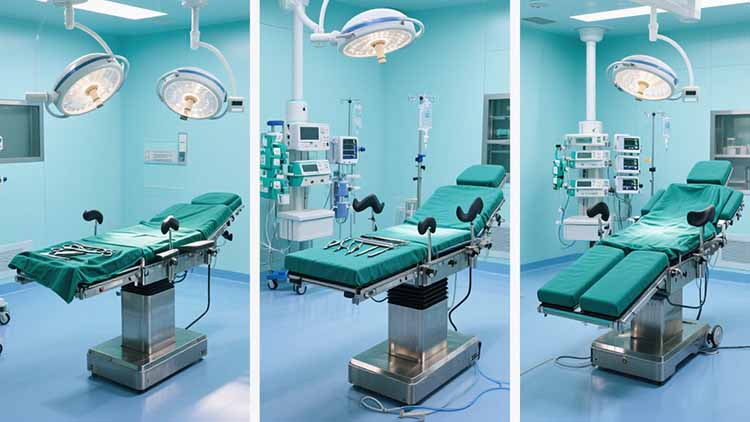
Operating table size is a key consideration for both patient safety and surgical efficiency. Standard dimensions vary, but most tables are designed to accommodate adult patients while offering flexibility for pediatric or bariatric cases.
• Length: Typical adult operating tables range from 70 to 84 inches (178 to 213 cm) to support the full body, with extendable sections for taller patients. Pediatric tables may be shorter (48 to 60 inches/122 to 152 cm) to fit smaller bodies securely.
• Width: Most tables have a width of 24 to 30 inches (61 to 76 cm), providing enough space for the patient while leaving room for surgical instruments and team members. Bariatric tables, designed for patients over 300 lbs (136 kg), may be wider (36 to 48 inches/91 to 122 cm) and reinforced for extra weight.
• Height: Adjustable height is a must—tables typically lower to 24 inches (61 cm) for patient transfer and raise to 48 inches (122 cm) to match the surgeon’s preferred working height.
Choosing the right operating table size prevents patient slippage, reduces strain on the surgical team, and ensures compatibility with other OR equipment (e.g., surgical lights, imaging machines).
Beyond size and type, modern operating tables include features that enhance safety, sterility, and usability:
• Adjustability: Electric or hydraulic controls allow precise adjustments for height, tilt (Trendelenburg or reverse Trendelenburg), lateral tilt, and backrest angle—critical for accessing different surgical sites.
• Sterility: Table tops and surfaces are made of non-porous, easy-to-clean materials (e.g., stainless steel or composite resins) to prevent infection. Removable or disposable covers add an extra layer of protection.
• Weight Capacity: Standard tables support 500 to 750 lbs (227 to 340 kg), while bariatric models can handle 1,000 lbs (454 kg) or more.
• Radiolucency: Many tables have carbon-fiber tops that are transparent to X-rays, CT scans, or fluoroscopy, allowing real-time imaging during surgery without moving the patient.
• Attachments: Accessory rails or mounting points for surgical tools, patient restraints, or imaging equipment (e.g., C-arms) make the table a versatile hub for OR workflows.
The operating room table is more than just a surface—it directly impacts patient outcomes. A well-designed table reduces the risk of pressure injuries (by distributing weight evenly), minimizes anesthesia-related complications (by supporting proper breathing), and allows surgeons to work with greater precision. For example, a neurosurgeon performing brain surgery relies on the table’s stability to avoid even the smallest movement, while an orthopedic surgeon uses its traction features to align broken bones correctly.
In short, the surgery table is the foundation of a safe, efficient operating room. Investing in high-quality, properly sized operating tables ensures that both patients and surgical teams have the tools they need for successful procedures.
Whether you’re a healthcare professional shopping for OR equipment or simply curious about medical technology, understanding what an operating table is—its types, size, and features—sheds light on a vital component of modern healthcare.


lingshi medical